
Interior designers and architects often need furniture that follows a project specification rather than a standard catalog size.
The drawing may call for a sofa with a particular overall width. A bench may need to fit between two fixed architectural elements. A lounge chair may require a specified seat height, arm profile, or upholstery. A commercial project may include several furniture pieces that need coordinated dimensions, materials, and finishes.
These are fabrication decisions.
Creative Style Furniture works with Houston designers, architects, and commercial project teams on custom furniture, upholstery, reupholstery, and case goods built around individual project requirements.
For professionals looking for a custom furniture fabricator in Houston, the discussion can begin with the design itself.
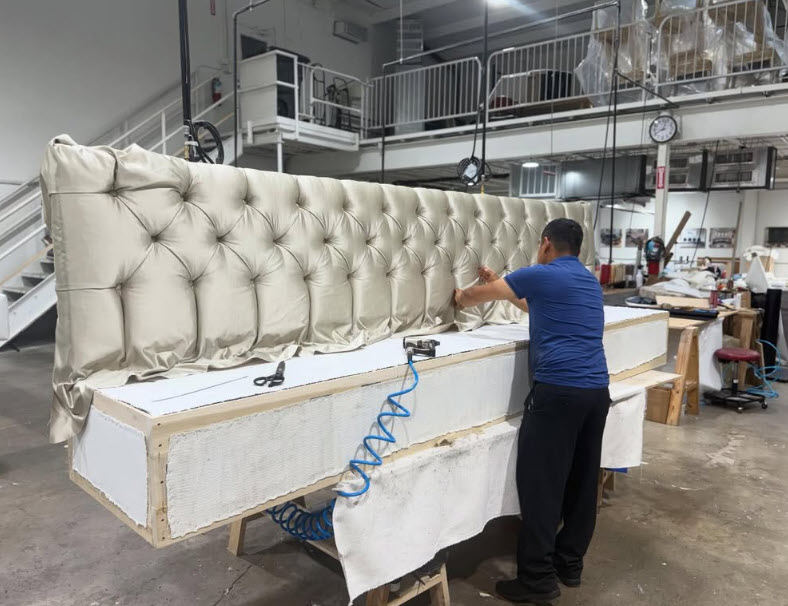
When a Project Calls for Custom Furniture Fabrication
Not every interior project requires custom furniture.
A standard product may be appropriate when the available dimensions, materials, finish, construction, and design meet the project’s specifications.
Custom fabrication becomes an option when the project calls for something different.
That may include:
- A specific overall width, depth, or height
- Custom seat dimensions
- A particular back height or pitch
- A specified arm height or style
- An unusual furniture configuration
- Upholstery selected for the project
- Custom cushion details
- Specified legs or bases
- Wood finish requirements
- Furniture designed for a particular architectural space
- Coordinated upholstered furniture and case goods
- A piece developed from a drawing, sketch, or reference image
The important word is specific.
A designer has a concept.
Then come the details.
Thirty-six inches becomes thirty-two. The back gets lower. The arms change. A fabric is selected. The leg profile is defined. The piece begins to move from an idea toward something that can actually be built.
That is where the relationship between designer and fabricator matters.
Working From Drawings, Sketches, and Design Specifications
A custom furniture project needs enough information to define what is being fabricated.
Depending on the piece, a designer or architect may provide:
- Furniture drawings
- Floor plans
- Elevations
- Sketches
- Reference photographs
- Overall dimensions
- Seat dimensions
- Upholstery specifications
- Finish selections
- Cushion requirements
- Trim or welt details
- Leg specifications
- Quantity
- Information about the intended use
Not every project will begin with the same level of documentation.
One designer may provide a detailed drawing package.
Another may begin with a photograph and a list of requested changes.
A project team may have a furniture plan that establishes the size and location of each piece but still need to finalize upholstery and construction details.
The information required depends on what is being built.
What matters is identifying those specifications before fabrication moves forward.
Custom Dimensions for Furniture That Needs to Fit the Plan
Dimensions are often one of the clearest reasons to consider custom furniture.
Commercial and residential interiors are designed around real measurements. Walls have fixed lengths. Columns occupy space. Doors require clearance. Windows establish boundaries. Built-ins, counters, fireplaces, and other architectural elements may determine where furniture can be placed.
A furniture piece needs to fit within that plan.
Custom fabrication lets the project team define the required dimensions before the piece is built.
Creative Style Furniture can make adjustments to factors including:
- Overall dimensions
- Seat height
- Back height
- Back pitch
- Arm height
These details can be particularly important when a designer is developing a specific furniture arrangement.
Consider a built-in seating area.
The available wall length is already established. The table locations may already be shown on the plan. The designer has selected the intended seat depth and back height.
There is little value in finding a piece that is almost right.
Almost the right length.
Almost the right depth.
Almost the right proportion.
Custom fabrication starts from the specified measurements instead.
Custom Upholstered Furniture for Designer Projects
Creative Style Furniture builds upholstered furniture to project specifications.
Depending on the project, the scope may include pieces such as:
- Sofas
- Sectionals
- Lounge chairs
- Dining chairs
- Benches
- Ottomans
- Banquettes
- Headboards
- Upholstered panels
- Other custom seating
The design team can establish the appearance and specifications of the piece before production.
That may include the overall profile, dimensions, upholstery, cushion details, arms, legs, trim, and related elements.
For upholstery, designers should also identify any project-specific material requirements.
If a commercial project requires a documented wear rating, cleaning method, performance characteristic, or certification, that requirement should be checked against the upholstery manufacturer’s specifications.
The fabric selection should match the requirements established for that particular project.
Custom Case Goods for Interior Design Projects
Some projects require upholstered furniture and hard furniture within the same interior.
Creative Style Furniture also produces custom case goods.
Depending on the design and fabrication scope, case goods may include:
- Cabinets
- Credenzas
- Tables
- Desks
- Storage pieces
- Display furniture
- Reception pieces
- Other custom-built furniture
Dimensions and finishes can be established as part of the project specifications.
This may be useful when a designer has a particular wall, niche, reception area, lounge, dining space, or other location that requires a piece with defined dimensions.
A credenza may need to stop at a specific point on a wall.
A table may need a particular height.
A cabinet may need to coordinate with other finishes selected for the room.
The drawing provides the requirement. Fabrication turns that requirement into the finished piece.
Commercial Furniture Projects for Designers and Architects
Custom furniture fabrication can be part of many types of commercial interiors.
Creative Style Furniture works within the commercial and hospitality sectors.
A designer or architect may need custom furniture for projects involving:
- Hotels
- Restaurants
- Private clubs
- Offices
- Reception areas
- Lounges
- Retail spaces
- Multifamily amenity spaces
- Other commercial interiors
The furniture requirements will differ by project.
A hotel lobby is not a restaurant.
A restaurant booth is not an office lounge chair.
A retail display piece is not a clubhouse sofa.
Different space. Different specifications. Different furniture.
The fabrication scope should follow the documents and requirements established for the individual project.
Reupholstery Can Also Be Included in a Design Project
An interior renovation may contain existing furniture that the designer or owner wants evaluated rather than automatically replaced.
Commercial reupholstery can be considered when an existing piece remains suitable for the project.
Several questions need to be answered first.
Does the furniture still have the correct dimensions?
Is the frame appropriate for continued use?
Does the shape fit the new design?
What work does the cushioning require?
What upholstery will replace the existing material?
The answers depend on the individual piece.
A designer may decide to keep some furniture, reupholster selected pieces, and specify new custom furniture for other parts of the project.
That creates a mixed furniture scope rather than treating every piece the same way.
Communication Between the Designer and Fabricator Matters
Custom furniture includes decisions that need to be defined before construction.
Size.
Shape.
Pitch.
Fabric.
Cushions.
Legs.
Trim.
Finish.
Quantity.
One decision connects to another.
Change the overall width and other dimensions may need to be reviewed. Change the upholstery pattern and fabric yardage may need to be recalculated. Change a leg style and the relationship between the frame and finished height may need to be checked.
Clear specifications give everyone working on the piece the same target.
This is where detailed project information has practical value.
It is not paperwork for the sake of paperwork.
It is the description of what needs to be built.
What to Send When Requesting a Custom Furniture Quote
Designers and architects contacting Creative Style Furniture about a project should provide the available information for each piece.
That may include:
- A photograph, drawing, or sketch
- Overall dimensions
- Quantity
- Furniture type
- Cushion specifications
- Upholstery selection
- Pattern repeat information
- Trim or welt specifications
- Leg style
- Finish requirements
- Intended use
- Project location
- Required delivery information
A project may not have every selection finalized when the initial discussion begins.
Provide what is available.
Identify what is still being determined.
That gives the fabricator a clearer picture of the current scope and what information will still be needed before the piece is finalized.
Houston Custom Furniture Fabrication for Design Professionals
Creative Style Furniture manufactures custom furniture in Houston for projects requiring individual specifications.
For interior designers and architects, that means the conversation does not have to begin with a product number from a furniture catalog.
It can begin with a drawing.
A measurement.
A fabric.
A room.
An idea.
Then the specifications become more detailed.
The dimensions are established. Materials are selected. Construction details are reviewed. The piece takes shape.
That is the value of custom fabrication for a design-driven project: the furniture is defined by the project specifications rather than limited to a predetermined combination of dimensions and finishes.
Discuss Your Custom Furniture Project With Creative Style Furniture
If you are an interior designer, architect, contractor, or project professional looking for custom furniture fabrication in Houston, contact Creative Style Furniture to discuss the pieces required for your project.
Send the available drawings, sketches, reference images, dimensions, quantities, upholstery information, finish selections, and other specifications.
Whether the scope involves one custom piece or furniture for a larger commercial interior, the starting point is the same.
Show us what needs to be built.
